Learn Spanish in Buenos Aires, Argentina: In-Person Courses, Classes & Lessons
83 Piedras Street, 3rd floor E, Buenos Aires, Argentina
Learn Spanish in Buenos Aires, Argentina: In-Person Courses, Classes & Lessons
83 Piedras Street, 3rd floor E, Buenos Aires, Argentina
Argentina offers international students much more than traditional classroom Spanish. Studying in Buenos Aires allows learners to combine intensive lessons with constant exposure to the language through cafés, shops, neighborhoods, cultural activities and daily conversations with local residents.
For students who want to learn Spanish in Argentina, Buenos Aires provides an especially complete immersion experience. It combines the advantages of a major international capital with the everyday reality of living in a Spanish-speaking environment.
At Íbero Spanish School, international students can study Spanish face to face in very small groups, follow a structured academic program and continue practicing the language throughout the city after classes finish.
With 20 hours of in-person Spanish lessons per week, professional teachers, Íbero Spanish learning textbooks, placement assessment and optional onsite accommodation, students can organize their entire Spanish immersion experience around one central location in Buenos Aires.
Why Learn Spanish in Argentina?
Learning Spanish in Argentina gives students the opportunity to transform the language from something studied academically into something used every day.
In your home country, Spanish practice may be limited to a weekly lesson, an app or occasional conversation.
In Argentina, Spanish becomes part of ordinary life.
You hear it when ordering coffee, buying groceries, travelling on public transportation, visiting museums, eating in restaurants and speaking with people throughout the city.
This constant exposure helps students develop listening comprehension and confidence while reinforcing what they learn during structured lessons.
Argentina is also an interesting destination for students who want to experience Latin American culture while improving a language spoken by hundreds of millions of people around the world.
Studying Spanish here allows you to develop practical communication skills while experiencing Argentine food, traditions, history, architecture and everyday life.
For international students coming from countries such as the United States, Canada, Australia, New Zealand, the United Kingdom, Brazil, Germany, the Netherlands and other parts of Europe, learning Spanish in Argentina can become both an educational experience and an unforgettable period of living abroad.
Why Choose Buenos Aires for Your Spanish Course?
Buenos Aires is one of the most attractive destinations in Argentina for international Spanish students because it provides an extraordinary variety of opportunities to use the language.
The city is large, active and culturally diverse.
Students can practice Spanish in traditional cafés, restaurants, bookstores, markets, museums, theaters, shops and countless everyday situations.
Each neighborhood also offers a different experience.
The historic streets of San Telmo feel very different from Palermo, Recoleta, Puerto Madero or the commercial center of the city.
This variety gives students many reasons to leave the classroom and interact with Buenos Aires in Spanish.
Another advantage is that Buenos Aires allows students to combine serious study with an active life outside school.
A typical day can include four hours of Spanish lessons in the morning followed by lunch, sightseeing, cultural activities and everyday interactions during the afternoon and evening.
This balance is one of the reasons Buenos Aires works so well for immersion.
What Kind of Spanish Is Spoken in Argentina?
The principal language spoken throughout Argentina is Spanish, although pronunciation, vocabulary and certain grammatical features vary between regions.
The Spanish most closely associated with Buenos Aires is generally known as Rioplatense Spanish.
Students who previously learned Spanish in Spain, Mexico or another Latin American country may notice differences immediately.
One of the most recognizable features is the use of vos rather than tú in informal communication.
For example, in Buenos Aires you will commonly hear:
Vos tenés instead of tú tienes
Vos querés instead of tú quieres
Vos podés instead of tú puedes
There are also characteristic differences in pronunciation, rhythm, intonation and everyday vocabulary.
For international learners, this makes studying in Buenos Aires particularly interesting because students learn standard Spanish structures while simultaneously developing the ability to understand genuine regional variation.
Learning Rioplatense Spanish in Buenos Aires
Students sometimes worry that learning Spanish in Argentina will make it difficult to communicate in other Spanish-speaking countries.
In practice, studying Rioplatense Spanish can actually strengthen your overall listening ability.
Spanish has many regional varieties.
A student who becomes comfortable hearing Argentine Spanish learns that a language does not sound exactly the same everywhere.
The essential grammar and vocabulary remain Spanish, while students become familiar with local pronunciation, the use of vos and characteristic Argentine expressions.
At Íbero Spanish School, students learn Spanish in the environment where Rioplatense Spanish is spoken naturally every day.
Teachers can help students understand the differences they hear outside school while also teaching Spanish that is useful for communication throughout the Spanish-speaking world.
The classroom provides the explanation.
Buenos Aires provides the practice.
Intensive Spanish Courses for International Students
For students travelling specifically to learn Spanish in Argentina, an intensive course can make much better use of the experience than taking only a few lessons each week.
At Íbero Spanish School, the principal intensive group program provides 20 hours of face-to-face Spanish classes per week, Monday through Friday.
The main schedule runs from 10:00 AM to 2:00 PM.
Students work on the principal areas required for successful communication, including:
Classes are taught in very small groups, allowing students to participate actively and receive personalized attention from their teachers.
Íbero also uses structured Spanish learning textbooks and supplementary academic materials, helping students progress systematically rather than attending disconnected conversation classes.
Students who want even greater individual attention can choose private Spanish classes or a combination program mixing group and private instruction.
An International Learning Environment at Íbero
Studying abroad is also about the people you meet.
Íbero welcomes students from many different countries and backgrounds.
Our classrooms have included students from Australia, the United Kingdom, the United States, Canada, New Zealand, Brazil, Germany, the Netherlands and many other European countries, as well as learners from other parts of the world.
This international environment is valuable for language learning.
When classmates do not all share the same native language, Spanish naturally becomes the common language of communication.
Students learn not only from their teacher but also from interacting with people who have different accents, experiences and ways of expressing themselves.
For people travelling alone to Argentina, the international atmosphere can also make settling into Buenos Aires easier.
How Long Should You Study Spanish in Argentina?
The ideal length of a Spanish immersion program depends on your current level, objectives and available time.
A one- or two-week intensive course can provide a useful introduction to Argentine Spanish and help existing students reactivate their language skills.
Three or four weeks give students more time to establish a routine and make measurable progress.
During this period, learners become more comfortable hearing the Buenos Aires accent, communicating in everyday situations and applying new grammar and vocabulary outside school.
Six to eight weeks create an even deeper immersion experience.
Students can work through considerably more academic material and often notice a significant increase in confidence and listening ability.
Those staying for several months can progress through multiple academic stages while becoming much more accustomed to using Spanish as part of everyday life.
The important principle is consistency.
Studying Spanish for several hours every weekday while using the language outside class creates a completely different experience from attending one lesson per week at home.
Accommodation While Learning Spanish in Buenos Aires
Where you stay can influence how convenient and immersive your experience becomes.
Students should consider accommodation that makes it easy to attend classes, explore Buenos Aires and interact with other people.
Íbero offers optional onsite accommodation at Palacio Piedras, in the same historic downtown Buenos Aires building where the Spanish school operates.
This creates a practical Live & Learn experience.
Students can live and study in the same location rather than spending time commuting to class every morning.
Depending on availability, students can choose private or shared-room accommodation and have access to common areas, a shared kitchen and spaces suitable for studying.
For students travelling alone from overseas, living in an international environment can also provide opportunities to meet other students and residents soon after arriving.
The central location means that after class, Buenos Aires is immediately outside the door.
Combining Spanish Lessons with Everyday Life in Argentina
The strongest immersion experience does not separate classroom study from everyday life.
The two should reinforce each other.
Imagine studying restaurant vocabulary during your morning Spanish class and then using it while ordering lunch.
You might learn the past tense and later use it while telling someone what you did the previous day.
You might study directions and transportation vocabulary before navigating the city.
You might learn new expressions from your teacher and then begin recognizing them in conversations around you.
These small connections are extremely powerful.
Buenos Aires constantly gives students opportunities to transform passive knowledge into active communication.
Simple daily activities become language practice:
ordering coffee;
asking questions in a shop;
reading signs;
buying groceries;
taking public transportation;
speaking with classmates;
watching Argentine television;
reading local news;
visiting museums;
talking with local residents.
The objective is not to understand everything immediately.
The objective is to make Spanish part of your daily routine.
A Typical Day Learning Spanish in Buenos Aires
A productive immersion day can be intensive without feeling like you are studying from morning until night.
At Íbero, a student might attend Spanish classes from 10:00 AM until 2:00 PM.
During those four hours, the class works on grammar, vocabulary, communication, listening, reading and speaking.
After class, the student can have lunch somewhere downtown and communicate in Spanish.
The afternoon might include visiting San Telmo, exploring a museum, walking through the historic center, studying in a café or meeting classmates.
Later, spending just 30 or 45 minutes reviewing the day's textbook material can reinforce what was learned in class.
During the evening, listening to Argentine Spanish through television, radio or conversations adds another layer of exposure.
This means that a four-hour Spanish lesson can become part of an entire day of language contact.
That is the real advantage of immersion.
Planning Your Spanish Study Trip to Argentina
A successful Spanish study trip begins with a few practical decisions.
First, decide how long you can realistically stay.
Then determine how intensively you want to study.
For students whose principal reason for travelling is learning Spanish, 20 hours per week provides a strong foundation for an immersion program.
Next, consider accommodation.
Staying centrally can make it easier to attend classes and explore Buenos Aires during your free time.
You should also determine your current Spanish level.
At Íbero, students complete a written and oral placement assessment so that they can begin at the most appropriate academic stage.
Finally, arrive with realistic expectations.
You do not need to understand every conversation during your first week.
Immersion works progressively.
At first, the speed and accent may seem challenging.
Then familiar words begin appearing repeatedly.
Soon you recognize structures you studied in class.
Gradually, conversations that once seemed impossibly fast become easier to follow.
Choosing a Spanish School in Argentina
If you are planning to learn Spanish in Argentina, choosing the right school matters.
A serious Spanish program should provide more than a classroom and a teacher.
Look for a school that offers:
Íbero Spanish School brings these elements together in downtown Buenos Aires.
Students study in person with professional teachers, work with structured Spanish learning textbooks and receive personalized attention in very small classes.
Our main intensive program provides 20 hours of Spanish instruction per week, while private and combination programs are available for students who want a different type of learning experience.
Optional onsite accommodation at Palacio Piedras also allows international students to combine their course and accommodation in the same location.
Learn Spanish in Argentina at Íbero Spanish School
Choosing to learn Spanish in Argentina means giving yourself the opportunity to experience the language rather than simply study it.
Buenos Aires provides the ideal environment for this type of immersion.
You can study Spanish every morning.
Hear Argentine Spanish throughout the day.
Practice with local residents.
Explore the culture.
Meet international classmates.
Learn to understand Rioplatense Spanish.
And gradually develop the confidence to communicate naturally in real situations.
At Íbero Spanish School, students can combine a genuine in-person academic program with very small groups, professional teachers, structured Spanish textbooks, placement assessment and optional onsite accommodation in central Buenos Aires.
For international students looking for a serious but culturally rich way to learn Spanish in Argentina, Buenos Aires offers something difficult to reproduce elsewhere:
the classroom teaches you the language, and the city gives you the opportunity to live it.
Learn Spanish in Argentina. Study in Buenos Aires. Experience the language every day at Íbero Spanish School.
Study Spanish in Buenos Aires at Ibero Spanish School
Our Spanish courses
Finding the right Spanish courses in Buenos Aires Argentina involves balancing your professional goals with your personal schedule and budget. At Íbero Spanish School, we understand that moving abroad is a big step. That is why we offer a hybrid approach, allowing you to start your linguistic journey from home before arriving in the "Paris of the South."
Our programs are led by university-trained instructors with Masters Degrees, ensuring that whether you are learning virtually or in our historic downtown building, you receive the highest academic standard available.
Your Spanish Courses Enrollment Options
We offer total flexibility for our students. You can choose to join us solely for classes, or bundle your education with our premium onsite housing in Palacio Piedras.
Frequently Asked Questions (FAQs)
Would it be possible to start with the online portion first and then join the Spanish language onsite program later? Yes, absolutely. Starting with the online portion is a great way to manage your schedule and budget. You can build your foundational skills (Beginner I & II) at home and then transition smoothly into our Intermediate groups once you arrive in Buenos Aires.
Can I pay only for the Spanish course online part now and decide on the onsite course later? Yes. You can complete the payment for the online portion to secure your spot and your instructor. As your travel dates approach, you can then decide on the onsite course and housing options based on our current availability.
Do you offer Spanish Courses without onsite accommodations? Yes. Many of our students, find their own housing and join us solely for the Dynamic Group Course. You are welcome to use our facilities, including the high-speed internet and student lobby, regardless of where you stay.
I am a beginner from London and speak French; will I progress faster? Yes! As our student Jeremy noted, speaking a Romance language like French provides a significant advantage in understanding Spanish grammar and cognates. Our Spanish language instructors will leverage your existing knowledge to help you progress more rapidly through the beginner levels.
How do I secure my spot for the upcoming Spanish course term? To finalize enrollment, we require a completed application form, a photo of your passport, and the course payment (typically via PayPal). Because private rooms and online spots for the first months of the year are in high demand, we recommend completing these steps by the end of the current week.
Choosing an Argentina Spanish Language School is the first step toward a life-changing cultural immersion. At Íbero Spanish School, we specialize in helping students navigate the beautiful complexities of the local dialect while maintaining a high academic standard that is recognized across the country.
Our Spanish school, located in the historic heart of Buenos Aires, serves as a bridge for international students, professionals, and future university candidates who want to call Argentina home.
Master the "Argentinian Accent"
A common question for those looking at an Argentina Spanish Language School is whether they will learn the local way of speaking. At Íbero, the answer is a resounding yes.
Rioplatense Dialect: We teach you the distinct "sh" sound for the letters ll and y and the melodic intonation unique to Buenos Aires.
The "Vos" Factor: You will learn to use voseo, which is essential for sounding natural and building relationships with locals.
Conquering the "R": Even if it’s been 30 years since your last Spanish class, our instructors use specialized techniques to help you finally master the rolling "rr" sound.
Your Pathway to University and Residency
For many of our students, Íbero is more than just an Argentina Spanish Language School; it is a gateway to higher education. We provide the professional certification necessary to move forward with your academic goals in South America.
Spanish Language Academic Certification
Upon completing your course at Íbero, you will receive a certificate stating your achieved level (aligned with CEFR standards). This certification is widely recognized and is a critical component of your academic portfolio when applying to local institutions.
Personalized Spanish Language Placement for Every Level
We understand that every student arrives with a different background. Whether you are a "basic speaker" who struggles with listening or a "complete beginner" refreshing 28 hours of study from 30 years ago, we have the right group for you.
Frequently Asked Questions (FAQs)
Will the certificate I receive be accepted by all universities in Argentina? Our certificates prove your language proficiency according to international standards (A1–C2). While most universities in Argentina accept Íbero's certification as proof of language study, we always recommend checking the specific "Spanish Proficiency" requirements of your chosen Master’s faculty, as some may require a specific state exam like the CELU or DELE, for which we provide expert preparation.
Is it possible to apply for a Master’s student visa without returning to my home country? Yes. Argentina allows for "change of status" applications in many cases. If you enter as a student at our Argentina Spanish Language School, you can work with migrations to transition your residency directly to a university-level visa once you enroll in your higher education program.
Is the Spanish taught at Íbero specifically the "Argentinian accent"? While we teach you "Universal Spanish" so you can be understood in Madrid or Mexico City, we focus heavily on the local accent and grammar (voseo). This ensures you are fully prepared to understand the locals in Buenos Aires, which is often the biggest challenge for students.
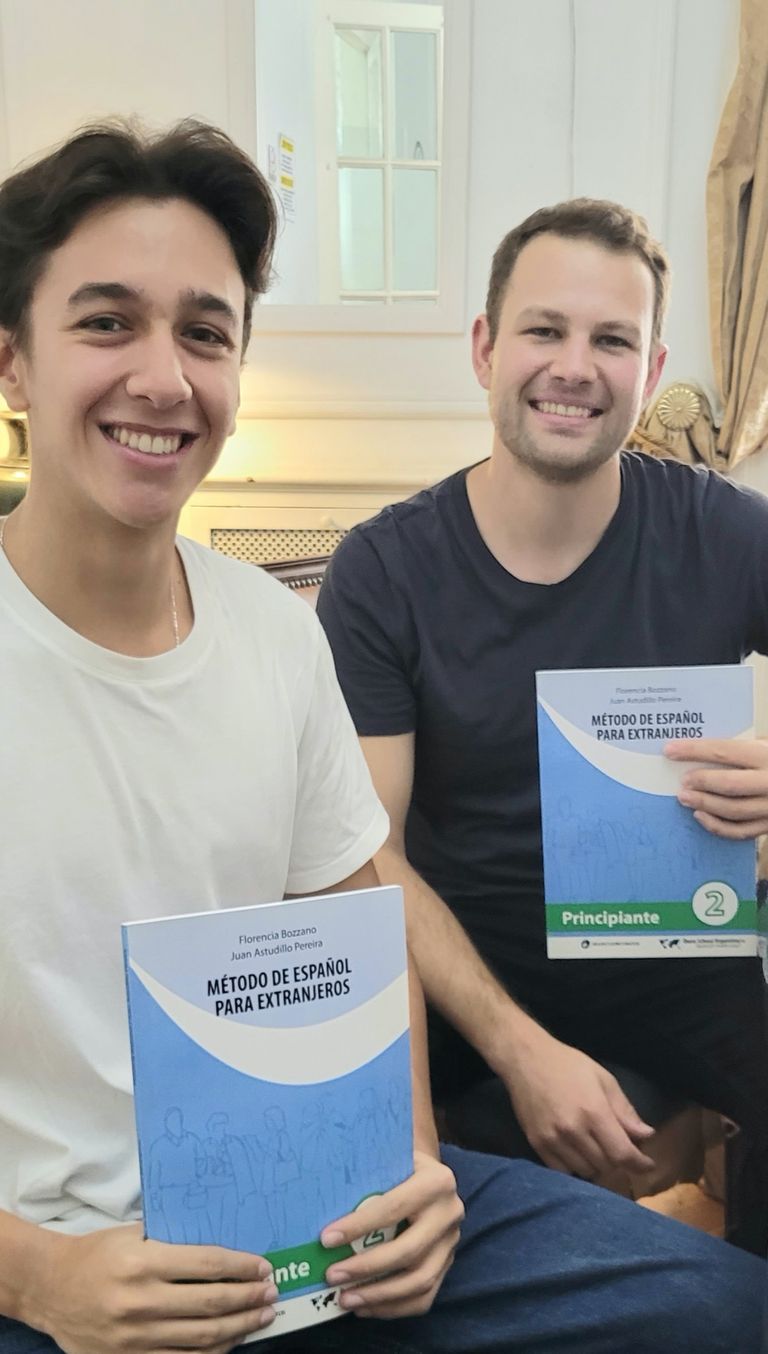
How do you handle students who can read well but can't speak or understand? This is very common! Our methodology is "communicative-first." We use our own textbooks to force interaction, helping you move the Spanish from your "passive" memory (reading) into your "active" memory (speaking).
We need your consent to load the translations
We use a third-party service to translate the website content that may collect data about your activity. Please review the details in the privacy policy and accept the service to view the translations.