Learn Spanish in Buenos Aires, Argentina: In-Person Courses, Classes & Lessons
83 Piedras Street, 3rd floor E, Buenos Aires, Argentina
Learn Spanish in Buenos Aires, Argentina: In-Person Courses, Classes & Lessons
83 Piedras Street, 3rd floor E, Buenos Aires, Argentina
We care passionately about our Spanish students and their academic progress. While at Íbero Spanish School you’ll find dedication to high standards. We have designed a complete Spanish program with books and levels ranging from Beginner to Superior, and a curriculum created to challenge your full potential.
Our curriculum encourages students to improve their spoken Spanish using a task-based method, focusing especially on conversation and listening skills. Students also build the vocabulary and strengthen their reading and writing skills.
At Íbero, not only do students have the chance to develop lasting friendships with people from all over the world, they also have the opportunity to be transformed from beginners to fluent Spanish speakers.
Buenos Aires is one of the most attractive destinations in the world for language learners. With its rich culture, European-style architecture, affordable cost of living, and welcoming locals, it is no surprise that thousands of international students choose to learn Spanish in Buenos Aires every year.
Whether you are a traveler, digital nomad, university student, retiree, professional, or someone planning a gap year in South America, finding the right Spanish school in Buenos Aires can make all the difference. Fortunately, studying Spanish in Argentina does not have to be expensive. With the right program, you can enjoy a complete Spanish immersion Buenos Aires experience while staying within your budget.
Many students assume that affordable language programs mean sacrificing quality. However, some of the best Spanish schools in Buenos Aires successfully combine reasonable prices with excellent academic standards.
One outstanding example is Ibero Spanish School, a highly regarded Spanish language school Buenos Aires located in the heart of downtown Buenos Aires, within walking distance of the Obelisco, Plaza de Mayo, San Telmo, and many of the city's most important attractions.
Why Choose Ibero Spanish School?
Ibero Spanish School has become a popular choice for students looking for affordable Spanish courses in Buenos Aireswithout compromising on educational quality.
Some of the school's main advantages include:
Study and Live in the Same Building
One of the features that makes Ibero unique among Spanish schools in Buenos Aires is its onsite accommodation.
Students looking for a Spanish school with accommodation Buenos Aires often face the challenge of commuting across the city. At Ibero, accommodation and classes are located in the same historic building, allowing students to maximize their study time and enjoy a true full immersion Spanish school Argentina with housing experience.
This option is particularly attractive for:
Students can choose between shared and private rooms while enjoying a multicultural environment with fellow learners from around the world.
Intensive Spanish Courses for Fast Progress
If your goal is to learn Spanish fast in Buenos Aires, intensive study is often the best approach.
Ibero offers a popular 20 hours per week Spanish course Buenos Aires program, with classes held every weekday morning. This structure allows students to practice Spanish during the afternoons while exploring local neighborhoods, museums, cafés, and cultural events.
The school's programs are ideal for:
Cultural Immersion Beyond the Classroom
Learning Spanish involves much more than grammar and vocabulary.
As a leading Spanish school with cultural activities Buenos Aires, Ibero regularly introduces students to Argentine culture through activities and workshops that may include:
These experiences help students develop confidence using Spanish in real-world situations and create a genuine language immersion Argentina experience.
Ideal for Long-Term Students
Students interested in a 6 month Spanish immersion Buenos Aires program or those planning to study Spanish in Buenos Aires for a year will find flexible options available.
The school frequently welcomes:
For students interested in extended stays, Ibero can also provide guidance regarding Spanish student visa Argentina assistance and long-term study options.
More Than Just Spanish Classes
Many international visitors combine Spanish study with other professional development opportunities.
Ibero is located in the same academic center as the well-known Buenos Aires TEFL Institute, allowing students to combine:
This makes it an attractive option for those seeking both language learning and career development abroad.
Is Buenos Aires a Good Place to Learn Spanish?
Absolutely.
Compared with many European and North American destinations, Buenos Aires offers excellent value for money. Students benefit from:
For anyone searching for the best value Spanish school Buenos Aires, the city itself becomes an essential part of the learning process.
Final Thoughts
If you are wondering:
Ibero Spanish School deserves serious consideration.
Its combination of affordable pricing, small-group instruction, native teachers, central location, cultural immersion opportunities, and onsite accommodation makes it one of the most attractive options for anyone looking to study Spanish abroad Argentina and experience authentic Argentine life while developing real language fluency.
Whether you are planning a short stay, a semester abroad, a gap year, or a full year of study, Ibero Spanish School offers a practical and budget-friendly path toward mastering Spanish in the heart of Buenos Aires.

Few foods are as comforting and beloved in Argentina as freshly made churros. Found in bakeries, cafés, beach towns, street fairs, and family gatherings throughout the country, churros have become an important part of Argentine food culture.
Whether enjoyed with a morning coffee, as an afternoon snack, or while walking through a local feria, churros offer visitors a delicious way to experience everyday Argentine life. For students planning to learn Spanish in Buenos Aires, discovering local foods like churros is also an excellent way to connect with the language and culture beyond the classroom.
At their core, churros are made from a simple dough consisting of flour, water, and a pinch of salt. The dough is piped into hot oil until golden and crispy on the outside while remaining soft on the inside.
While the original recipe arrived from Spain centuries ago, Argentina has developed its own distinctive churro tradition. Today, Argentine churros are often filled with dulce de leche, chocolate, vanilla cream, or pastry cream, making them sweeter and more indulgent than many traditional Spanish versions.
In cities such as Buenos Aires, Mar del Plata, Córdoba, Rosario, and Mendoza, churros are a favorite treat among locals of all ages.
What Are Churros con Dulce de Leche?
Churros are long strips of fried dough with a crispy golden exterior and a soft interior. While traditional Spanish churros are often served plain or accompanied by hot chocolate, Argentines took the recipe a step further by filling them with dulce de leche, the country's most famous sweet spread.
The combination is simple yet unforgettable. The warm, crunchy texture of the churro perfectly complements the rich, creamy sweetness of the dulce de leche filling, creating a dessert that is loved by both locals and visitors.
The Importance of Dulce de Leche in Argentina
Dulce de leche is often considered Argentina's national sweet. Made by slowly cooking milk and sugar until it becomes thick and caramelized, it can be found in countless Argentine desserts including cakes, pastries, alfajores, ice cream, and of course, churros.
For many Argentines, dulce de leche is more than just an ingredient—it's part of their cultural identity. This is why churros filled with dulce de leche have become one of the most popular versions found across the country.
The Famous Argentine Dulce de Leche Churro
Ask most Argentines about their favorite churro and many will immediately mention dulce de leche.
This iconic filling is made from slowly cooked sweetened milk and is considered one of Argentina's national treasures. When paired with a freshly fried churro, the result is one of the country's most beloved desserts.
Visitors often discover that a warm churro filled with dulce de leche and accompanied by a cup of coffee or mate is one of the simplest yet most satisfying culinary experiences Argentina has to offer.
Churros and Argentine Beach Culture
No discussion about Argentine churros would be complete without mentioning the Atlantic Coast.
During the summer months, beach destinations such as Mar del Plata, Villa Gesell, Pinamar, and Cariló become famous for their churro stands. Walking along the beachfront while enjoying freshly made churros filled with dulce de leche has become a cherished holiday tradition for generations of Argentine families.
For many locals, churros are closely associated with childhood memories, summer vacations, and time spent with family and friends.
How Churros Bring People Together
One reason churros remain so popular is their ability to bring people together.
Much like mate, Argentina's national drink, churros are often shared among friends and family. They frequently appear during weekend gatherings, birthday celebrations, afternoon meriendas, and special occasions.
Food plays a central role in Argentine culture, and learning about local traditions helps international visitors gain a deeper understanding of everyday life in the country.
Learning Spanish Through Food and Culture
One of the most effective ways to learn a language is through cultural immersion.
Understanding Argentine foods, traditions, slang, customs, and social habits helps students develop practical language skills while building confidence in real-world situations. Ordering food, chatting with locals in cafés, visiting markets, and discussing Argentine cuisine all provide valuable opportunities to practice Spanish naturally.
This is why cultural experiences are such an important part of studying abroad in Argentina.
Learn Spanish in Buenos Aires While Discovering Argentine Culture
Students who want a complete language immersion experience often choose Ibero Spanish School, located in the heart of downtown Buenos Aires.
The school offers intensive Spanish programs, small-group classes, native Argentine teachers, cultural activities, and onsite accommodation in the same historic building where classes take place. This allows students to combine language study with daily exposure to Argentine life, traditions, and cuisine.
Whether you are enjoying your first churro filled with dulce de leche, exploring the historic streets of San Telmo, or practicing Spanish with locals at a neighborhood café, every experience becomes part of the learning process.
A Sweet Symbol of Argentina
Although churros originally arrived from Spain, Argentina has transformed them into something uniquely its own. From beach resorts to bustling city cafés, churros continue to be one of the country's most beloved treats.
For visitors learning Spanish in Buenos Aires, tasting authentic Argentine churros is much more than trying a dessert—it is an opportunity to experience a small but delicious piece of Argentine culture.
And as every local knows, a freshly made churro filled with dulce de leche is always a good idea.
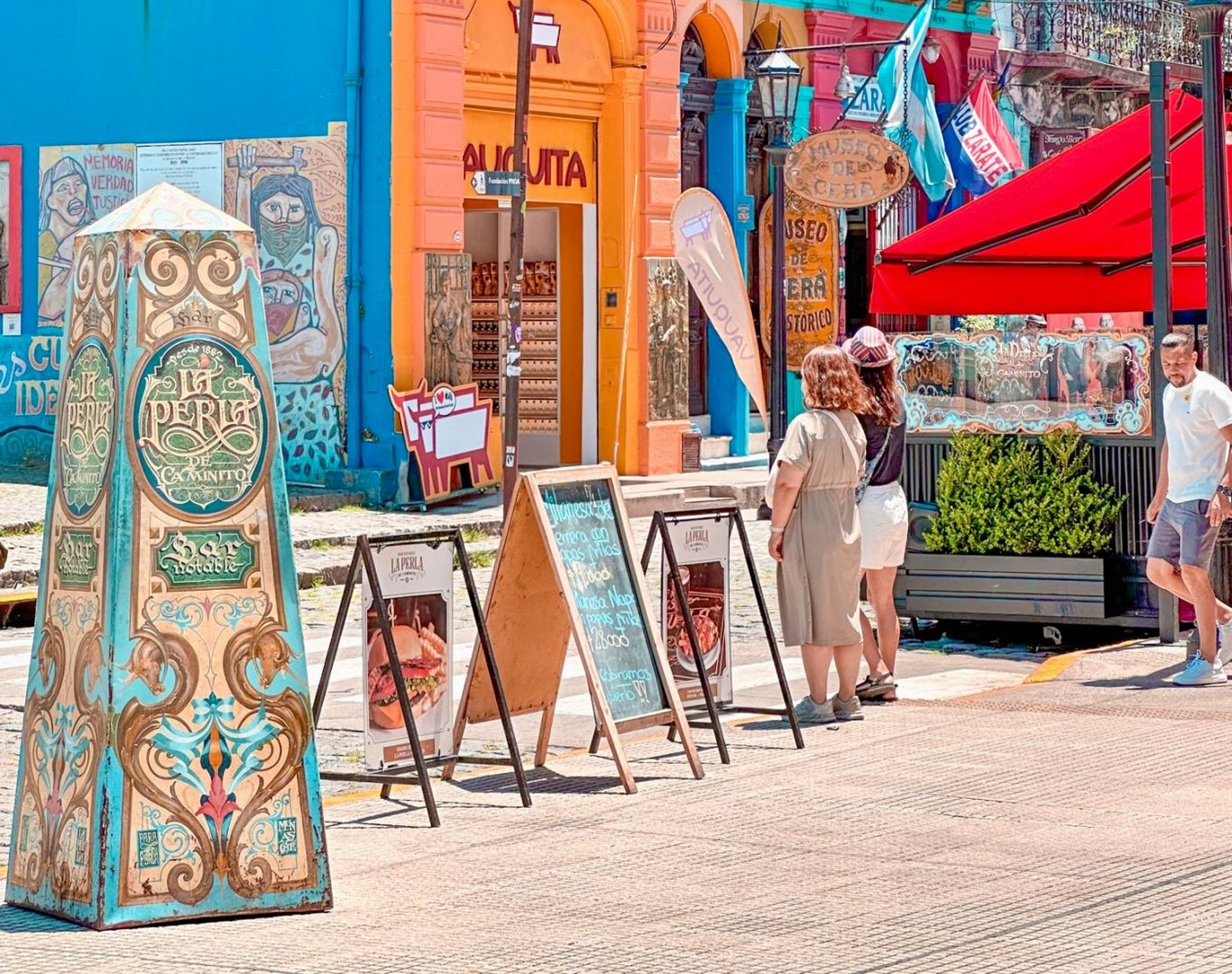
If you're visiting Buenos Aires, few places capture the city's artistic spirit and cultural heritage quite like La Boca. Famous for its brightly painted houses, tango traditions, street art, and passionate football culture, this historic neighborhood offers an unforgettable experience for travelers looking to explore the authentic side of Argentina.
Whether you're interested in history, art, photography, or local culture, La Boca deserves a place on every visitor's itinerary.
Visit the Famous Caminito
The highlight of La Boca is undoubtedly Caminito, Buenos Aires' most famous pedestrian street and one of Argentina's most photographed attractions.
This colorful open-air museum stretches for approximately 150 meters and is lined with vibrant houses made of wood and corrugated metal. The bright colors have become a symbol of both La Boca and Buenos Aires itself.
Originally, the area was occupied by a small stream and later by railway tracks that eventually fell into disuse. During the mid-20th century, local residents worked together to transform the neglected space into the cultural landmark it is today.
The famous Argentine artist Benito Quinquela Martín played a key role in this transformation, helping paint the neighborhood's distinctive buildings and promoting artistic projects that continue to attract visitors from around the world.
Learn About Argentina's Immigrant History
La Boca was historically home to large communities of Italian immigrants, particularly those arriving from Genoa. Their influence can still be seen today in the neighborhood's architecture, traditions, cuisine, and local identity.
Walking through the streets of La Boca offers visitors a fascinating glimpse into the immigrant roots that helped shape modern Buenos Aires.
The traditional houses known as "conventillos" once accommodated working-class immigrant families and remain one of the neighborhood's most recognizable features.
Experience the Birthplace of Tango
La Boca played an important role in the development of tango, Argentina's most famous musical and dance tradition.
As different immigrant communities settled in the area, their cultures blended together, helping create the unique rhythms and styles that would later become tango.
Today, visitors can often enjoy live tango performances in Caminito, watch dancers perform in the streets, and learn more about the history of this iconic Argentine art form.
Admire Street Art and Public Sculptures
Art lovers will find plenty to admire throughout La Boca.
The neighborhood is filled with murals, sculptures, and public artworks that reflect local history, social issues, and community pride. Many of these works were donated by renowned Argentine artists and contribute to the area's reputation as one of Buenos Aires' most creative districts.
Every corner offers excellent opportunities for photography and cultural exploration.
Visit La Bombonera Stadium
Football enthusiasts should not miss the chance to visit La Bombonera, the legendary home of the football club Boca Juniors.
Located just a short walk from Caminito, the stadium is one of the most iconic sporting venues in the world. Visitors can explore the museum, learn about the club's history, and discover why football plays such an important role in Argentine culture.
Explore Local Museums
La Boca is home to several interesting museums, including the historic wax museum and cultural institutions dedicated to preserving the neighborhood's rich heritage.
The area also offers opportunities to learn more about Benito Quinquela Martín, whose artistic legacy remains deeply connected to La Boca's identity.
Enjoy Local Food and Cafés
After exploring the neighborhood, visitors can relax at one of the many cafés and restaurants nearby. Traditional Argentine dishes such as empanadas, choripán, milanesas, and dulce de leche desserts can be found throughout the area.
Enjoying local cuisine is one of the best ways to connect with Argentine culture and practice a few Spanish phrases with friendly locals.
Learn Spanish While Discovering Buenos Aires
Many visitors quickly realize that exploring neighborhoods like La Boca becomes even more rewarding when they can communicate in Spanish.
For those looking to deepen their cultural experience, Ibero Spanish School offers intensive Spanish courses in the heart of downtown Buenos Aires. Students benefit from small-group classes, native Argentine teachers, cultural activities, and onsite accommodation in the same building as the school.
Learning Spanish allows visitors to move beyond the typical tourist experience, interact more confidently with locals, understand Argentina's rich history, and fully appreciate unique places like La Boca.
After all, the best way to discover Buenos Aires is not only by seeing its neighborhoods—but also by speaking its language.
We need your consent to load the translations
We use a third-party service to translate the website content that may collect data about your activity. Please review the details in the privacy policy and accept the service to view the translations.